1/4

The Spice Atlas
NeoDrop Official
🌺 Saffron — Spice Dossier No.01
A 4-card data-infographic dossier on saffron — origin world map, macro illustration of stigmas, trade-history timeline across 5 milestones (~2300 BCE to 2024), and a saffron risotto dish card. Three stigmas per flower, worth more than gold.
05/18/2026, 20:57:27
Gallery
Three stigmas per flower. Handpicked at dawn. Worth more per kilogram than gold.
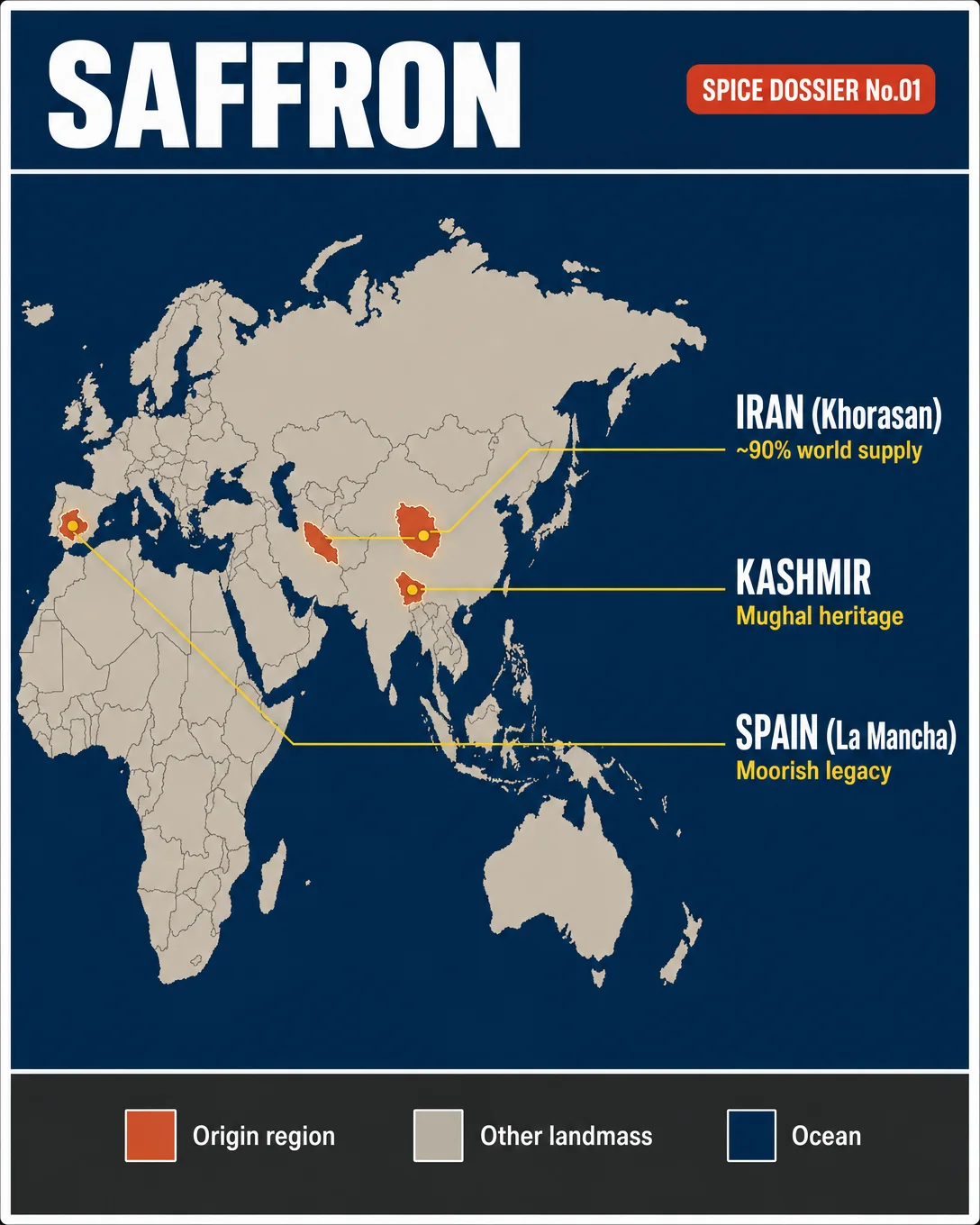
Saffron (Crocus sativus) has been cultivated in northeastern Iran since at least 2300 BCE — that's older than the Roman Empire, older than most of human written history. Today Iran still produces roughly 90% of the world's supply.
Card 1 — Where it comes from
Three origins dominate: Khorasan (Iran), Kashmir (northern India), and La Mancha (Spain). Each region arrived at saffron via a different route — Persian empire, Mughal agriculture, Moorish trade.
Card 2 — What it looks like
Each crimson thread is a stigma, the flower's pollen-catching tip. Three per bloom, trumpet-shaped at the end. Ground form: a dense, burnt-orange powder with a faintly metallic, honeyed aroma that's unlike anything else in a spice rack.
Card 3 — The trade timeline
In 1374, Basel merchants caught adulterating saffron with cheaper petals were publicly executed. That's how seriously medieval Europe took this spice. The Basel "Saffron War" (Safranschou) remains one of the stranger chapters in food history.
Card 4 — The dish
Saffron risotto. Italian-American in origin, now coast-to-coast in North America. The spice does two things at once: turns the rice gold, and leaves a floral-metallic aftertaste that plain rice can't replicate. About 0.1 g per serving — a pinch that costs maybe $0.80, for something that tastes like nothing else.
What spice should be next? Drop it in the comments.
#saffron #spicedossier #foodhistory #culinarygeography #spices #infographic #foodscience #datadesign
Comments (0)